

Explore Prehistoric Tennessee
Discover dinosaurs and other ancient species that roamed the Earth for more than a hundred million years—right here at Adventure Science Center. This exciting new exhibition features Tennessee’s important fossil discoveries and active learning through our Dino Dig, where learners can make discoveries of their own.
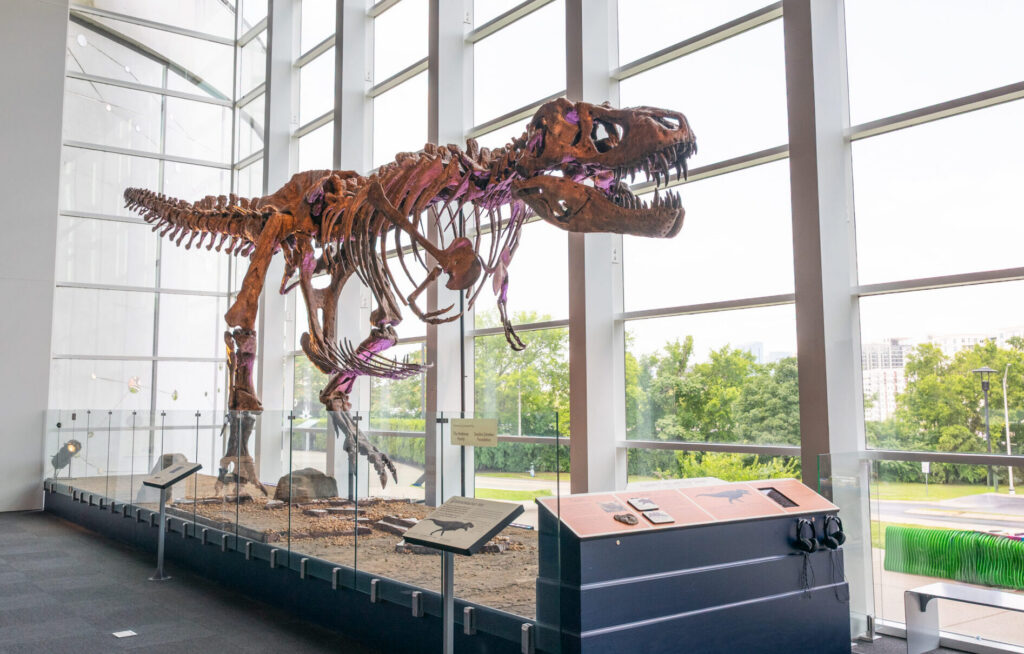
Tyrannosaurus rex
Look up in awe at this 39-foot king of the dinosaurs! Get up close and personal with a life-sized skull, peer into a model of its brain, and see just how little brainpower it took to become the most feared predator of the Cretaceous. Despite its massive size, Tyrannosaurus rex had a bite force strong enough to crush bone. Smell its breath and environment, then mix sounds to create your own realistic roar.
Dino Dig
Put on your Paleontology vest and get digging for history! Use brushes to find fossils buried below.
Bone Bed
Paleontologists don't often find fossils arranged neatly into their skeletal form. This amazing cast shows a section of a Montana dig site containing multiple dinosaur species. Through careful investigation, researchers have pieced together what might've happened.

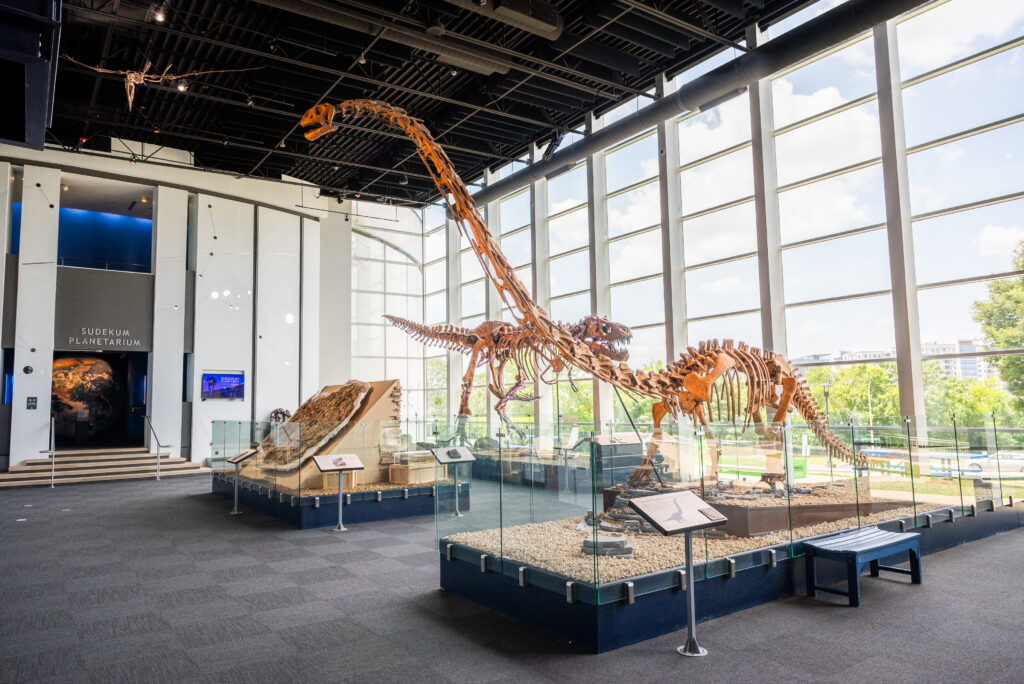
Mamenchisaurus
Sauropods (aka long-necked dinosaurs) like Mamenchisaurus were the largest animals to ever walk the Earth. Check out the cast of a juvenile Mamenchisaurus to see a creature whose neck was even longer than that of a giraffe and learn how big the largest dinosaurs could get.
Flying Reptiles
The age of massive reptiles wasn't confined to dinosaurs! Hanging in Fossil Frontiers are skeletons of three creatures that took to the sky millions of years ago. Check them out from below before climbing to the second floor to meet them eye-to-eye.
Deinonychus
The discovery of Deinonychus was a landmark in the history of paleontology. It inspired the Velociraptors of Jurassic Park and serves as an important piece of evidence linking dinosaurs with the birds of today. Find out why its name means terrible claw and how it fits into our modern understanding of dinosaurs.
Tennessee Fossils
Tennessee's fossil sites span hundreds of millions of years, from the time of the dinosaurs to the recent ice ages. Explore a range of real fossils from across the state, including from right here in Nashville! Discover how the Nashville Predators got their name and how you can search for fossils within walking distance of the science center.
Fossil Frontiers is located on the first floor near the Sudekum Planetarium.
This exhibition was made possible by:




And the Sandra Schatten Foundation and the Mathman Family.